
7 Criteria for Boilermaking Cutting Discs in 2026
Boilermaking and industrial cutting
Guide to choosing boilermaking cutting discs by material, thickness, tool, safety, service life and continuity of supply.
These are the 7 criteria for boilermaking cutting discs we recommend reviewing:
- Main material of the part
- Thickness and geometry of the cut
- Diameter and machine compatibility
- Type of disc for steel, stainless steel or aluminium
- Speed, pressure and heat control
- Safety, RPM and condition of the consumable
- Cost per cut and continuity of supply
In boilermaking, a cutting disc is not chosen by diameter alone. It has to match the material, the thickness, the type of machine, the cutting position and the pace of production. Cutting thin stainless steel sheet is not the same as cutting carbon steel sections, tube, flat bar or parts that will then be prepared for welding.
At Abrasteel we recommend judging boilermaking cutting discs by their real performance in the workshop: cutting speed, stability, safety, burr produced, heat in the part, number of cuts per disc and how easy it is to keep the same reference in stock. Unit price matters, but on its own it does not explain the final cost of a repetitive operation.
This guide is aimed at workshop managers, industrial buyers, maintenance staff and operators who need to select discs for cutting metal in boilermaking environments. You will see what to check before buying, when a more specific range is worth using, how to link cutting with grinding and which Abrasteel products may fit each scenario.
If the job involves only general metal cutting, a broad guide may be enough. In boilermaking, the decision has to be more precise: there is welding, assembly, edge preparation, part cleaning, finishing and maintenance of structures or tanks. The cutting disc is the first decision, but it shapes everything that follows.
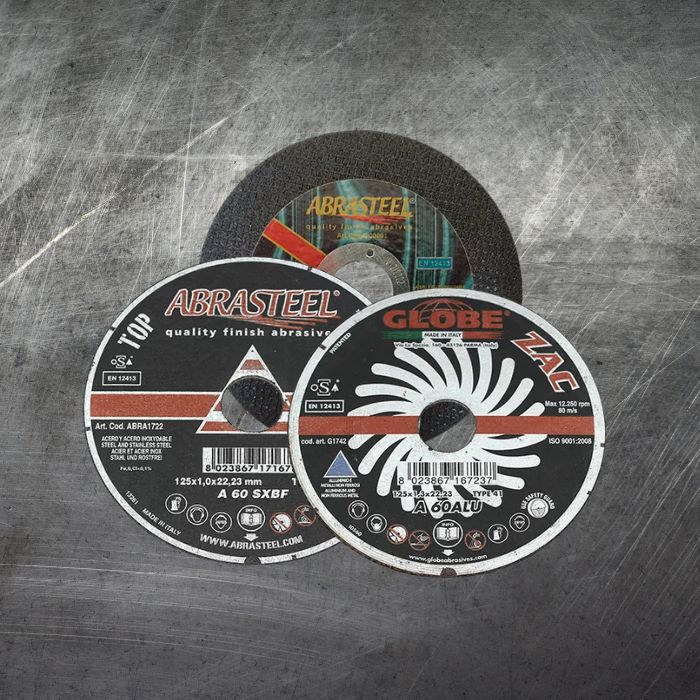
7 criteria for boilermaking cutting discs
1. Main material of the part
The first filter is the material. On carbon steel, the priorities are usually feed rate, stability and cost per cut. On stainless steel, you need to limit heating, avoid contamination and aim for a clean cut that does not complicate later preparation. On aluminium or soft materials, the risk of clogging means choosing discs suited to that behaviour.
If the workshop handles mixed materials, it is best to keep references separate and stop the same consumable going from carbon steel to stainless steel. It may look like a saving, but on stainless parts it can cause finishing problems, surface rust or rework.
2. Thickness and geometry of the cut
Boilermaking combines flat parts, tubes, sections, flanges and components with geometries far less convenient than a test plate. The disc must enter steadily, hold the line and leave a manageable burr. On thin material, a fast and accurate cut is what counts; on thicker sections, the strength of the disc and its ability to remove material without overheating matter more.
It also depends on whether the cut will be visible, whether the part will be welded, whether the edge will be machined later or whether it is enough just to separate material. The more demanding the next stage, the more important it is to reduce deviation, burning and burrs from the very first cut.
3. Diameter and machine compatibility
The disc must be compatible with the tool, the guard, the spindle and the speed. On an angle grinder, cut-off machine or chop saw, it is not enough for the disc to fit physically: you need to check diameter, thickness, bore, maximum RPM and available power. An underpowered machine makes the disc work badly; an overly aggressive machine without control increases risk and wear.
In repetitive work, ease of mounting and availability of common sizes also count. If the workshop uses several machines, it is worth standardising references to avoid mistakes and keep consumption predictable.
4. Type of disc for steel, stainless steel or aluminium
Not every cutting disc works equally well on every metal. On ordinary steel a versatile range may be suitable; for stainless steel it is best to select discs designed to minimise contamination and heat; for aluminium a specific solution that reduces clogging is recommended. In the Abrasteel catalogue you can review the cutting discs family and compare references by material.
Good practice in boilermaking is to define one base reference for general use and specific references for the materials that cause the most problems. That avoids over-specifying every consumable and keeps the more technical product for the operation that really needs it.
5. Speed, pressure and heat control
The cut should be firm, but not forced. Pressing harder does not always cut faster: it can slow the machine, heat the part, wear the disc unevenly and increase the burr. The aim is for the disc to work at the right peripheral speed and under constant pressure.
On stainless steel, tanks, parts with tolerances or components that will be welded afterwards, controlling heat is especially important. An overheated area may need cleaning, reworking or correcting before moving on to the next stage.
6. Safety, RPM and condition of the consumable
A cutting disc runs at high speed. Before using it, check the expiry date, condition, cracks, knocks, moisture, mounting, guard and maximum RPM. In industrial purchasing, it is worth insisting on a stable, traceable reference rather than consumables without clear information.
Safety is not limited to the disc. The operator, the cutting position, how the part is clamped, spark extraction and the surroundings all count too. A good disc does not make up for a badly clamped part or an unguarded machine.
7. Cost per cut and continuity of supply
The final criterion should not be the price per unit, but the cost per accepted cut. Look at service life, speed, number of changes, edge quality, incidents, stoppages and rework. A disc that costs a little more can be more profitable if it reduces cycle times or leaves less work afterwards.
Continuity matters too. In boilermaking, running out of a reference forces a process change or acceptance of different consumables in the middle of a production run. That is why at Abrasteel we place importance on advice and stable supply for workshops with recurring consumption.
What buyers of boilermaking cutting discs are looking for
Anyone looking for boilermaking cutting discs does not usually want a generic explanation of what a disc is. They normally need to settle a real purchase: which reference to use to cut sheet, tube, sections, stainless parts, aluminium or components that will go on to welding.
The intent is industrial rather than domestic. The reader wants to know whether the disc holds up, cuts straight, avoids burrs, reduces heat and whether there will be stock when they reorder. They may also need an alternative to improve performance without changing the machine or altering the way they work too much.
Real industrial need
Select a cutting disc that matches the material, thickness, machine, safety and next stage, avoiding stoppages, poor edges and irregular consumption.
That is why this post is different from a general guide to discs for metal. Here the focus is boilermaking: large or repetitive parts, preparation for joining, workshop needs and technical purchasing. For a broader explanation of discs for metal, see our guide on how to choose a cutting disc for metal.
Cutting, preparation and later stages in boilermaking
In a boilermaking workshop, cutting is rarely a stand-alone operation. It may be followed by grinding, bevelling, weld preparation, rust or paint removal, blending of weld beads, visible finishing and maintenance of parts already installed. Choosing the wrong cutting disc can pass the problem on to all of those stages.
If the cut leaves too much burr, the operator will need more grinding time. If it generates a lot of heat on stainless steel, it may require cleaning or reworking. If the cutting line wanders, the part may not fit properly at assembly. That is why it pays to think about the whole process, not just about separating material.
For later operations, Abrasteel offers grinding discs, flap discs, brushes and cleaning solutions. The cutting disc should open the process with as little deviation as possible so that the following stages are faster and more repeatable.
- Cutting: separate material accurately and safely.
- Grinding: remove burrs or excess material after cutting.
- Weld preparation: leave clean, accessible and consistent edges.
- Cleaning: remove rust, paint, mill scale or residues before assembly.
- Finishing: soften marks if the part remains visible.
- Maintenance: repeat cuts or repairs with stable references.
Selection table by material and thickness
This table is intended as a purchasing guide. The exact reference will depend on the machine, diameter, disc thickness, material and edge requirements, but it helps to organise the decision before asking for advice or a quote.
| Boilermaking scenario | What to check | Related Abrasteel product | Technical precaution |
|---|---|---|---|
| Carbon steel sheet or sections | Cutting speed, stability and burr | BASIC or TOP cutting discs | Avoid excessive pressure and badly clamped parts |
| Stainless steel | Heat, contamination and edge quality | XTREM cutting disc | Keep steel and stainless consumables separate |
| Aluminium or soft material | Clogging, swarf clearance and clean cut | ALU cutting disc | Do not use discs designed for steel only |
| Part for later welding | Burr, edge, heat and accessibility | Cutting disc + grinding or flap disc | Plan grinding and cleaning after cutting |
| Maintenance and repair | Access, position, sparks and safety of the surroundings | Cutting disc suited to material and machine | Check the condition and clamping of the part before cutting |
Related products to compare
These families and references help cover cutting and the later stages of boilermaking without mixing unsuitable consumables. For an exact selection, it is best to state material, thickness, machine and workload.

Cutting discs
Main family for cutting metal, stainless steel and aluminium in boilermaking work.

TOP cutting disc
A useful reference for alloys, iron, steel and stainless steel when higher performance is the goal.

XTREM cutting disc
The option for stainless steels and jobs where heat control matters.
Common mistakes when cutting boilermaking parts
Using the same disc for steel and stainless steel
This is one of the most common mistakes. It may seem practical, but on stainless steel it is best to avoid contamination and select a suitable consumable. Keeping references separate reduces risks and makes it easier to maintain a repeatable process.
Choosing on unit price alone
A cheap disc can turn out expensive if it cuts slowly, wears quickly or leaves a lot of grinding work. In boilermaking it is worth calculating the cost per finished cut, not just the price per box.
Forcing pressure to go faster
Excessive pressure can heat the material, damage the disc and increase the burr. If the disc is not cutting well, before forcing it check the material, diameter, machine, speed and condition of the consumable.
Not planning the next stage
If welding, fitting or finishing will follow the cut, the edge matters. A fast but inaccurate cut can increase grinding, cleaning or preparation time. Buying the disc should take the whole process into account.
Not checking safety and storage
Discs must be stored correctly and inspected before use. Moisture, knocks, cracks, incorrect mounting or use above the permitted RPM can turn a routine operation into an unnecessary risk.
Abrasteel as a supplier of boilermaking cutting discs
At Abrasteel we supply abrasives for cutting, grinding, sanding, cleaning, finishing and polishing metal and stainless steel. For boilermaking, this means the cutting disc can be selected as part of a wider solution, taking into account what will happen next: weld preparation, burr removal, cleaning or maintenance.
We can help you review material, thickness, machine, consumption volume and finishing goal in order to propose a suitable reference. This conversation is especially useful when there are changes of material, burr problems, excess heat, premature breakage or irregular consumption between operators.
If you need discs for a specific application, you can browse the Abrasteel cutting discs family or ask for technical help through our contact page. You can also check the guide to boilermaking tools to connect cutting, grinding and finishing in a single workflow.
Frequently Asked Questions (FAQs)
Which cutting disc should I use in boilermaking?
It depends on the material, the thickness, the machine and the next stage. For carbon steel a versatile reference may be suitable; for stainless steel a specific disc that controls heat and contamination is advisable; for aluminium a solution designed to avoid clogging is better. In repetitive work, also check cost per cut and stock.
Can I use the same disc for steel and stainless steel?
It is not the best option in a professional environment. On stainless steel you want to avoid ferrous contamination and reduce finishing problems. Separating discs by material improves process traceability and reduces rework, especially when the part will be welded, cleaned or finished afterwards.
Does the thinnest disc always cut best?
A thin disc can cut quickly and leave less material to remove, but it is not always the best option. You need to weigh stability, part thickness, geometry, machine and safety. On difficult sections or demanding jobs, it may be better to prioritise strength and control over sheer speed.
How do I reduce burrs after cutting?
Start by choosing a disc suited to the material and keeping the pressure constant. Also check how the part is clamped, the condition of the machine and the speed. If burrs are part of the process, plan a grinding disc, flap disc or brush afterwards, depending on the expected finish.
What information should I give when ordering cutting discs?
State the material, thickness, type of part, machine, required diameter, approximate consumption volume and whether there will be welding or finishing afterwards. With that information it is easier to recommend a reference that balances speed, service life, safety and cost per operation.
When should I move from a general disc to a specific one?
When recurring problems appear: slow cutting, heating, excessive burr, rapid wear, contamination on stainless steel or clogging on aluminium. Specific references are also worth using when volumes are high and a small improvement per cut adds up to cumulative savings.
Abrasteel advice
Which disc fits your boilermaking work?
Tell us the material, thickness and machine, and we will help you choose.
Contact us
Leave us your details and one of our sales representatives will contact you shortly.