
The importance of proper abrasive waste management in the industry
How should abrasive product waste be managed?
In a world where sustainability and environmental care are crucial, industries face the challenge of properly managing their waste. In the industrial sanding sector, abrasive waste plays a significant role. Here, we will explore the management of this waste, its classification, and the implications of improper management.
Identification and treatment of abrasive waste
The world of sanding and polishing is vast and complex. At the end of the sanding process, the abrasives used in this procedure not only lose their effectiveness but also generate waste.
These residues are a byproduct of the wear and use of the abrasive material. But it is not just about the abrasive material itself; often, it also involves remnants of the backing material to which the abrasive was attached, such as paper, cloth, or vulcanized fiber.
Identifying these residues is the essential first step for proper management. Companies must conduct a thorough review of the materials used in their processes to determine exactly which types of abrasives are involved and what their composition is. These details are essential, as waste from different abrasives may require different disposal treatments.
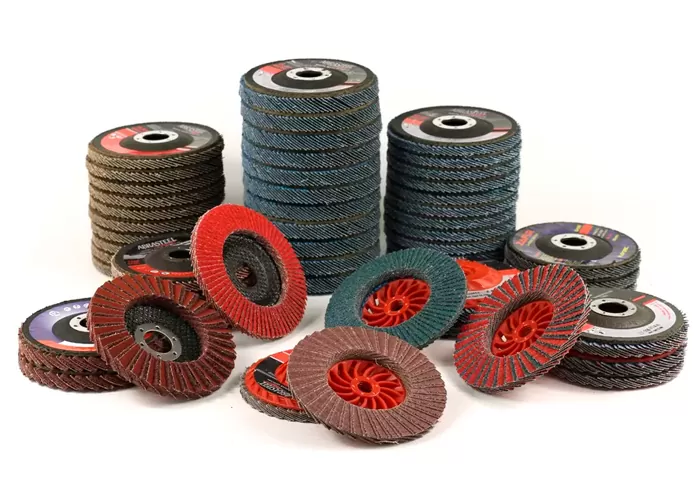
It is important to emphasize that not all abrasives are created equal. Some may contain chemical or mineral components that, while vital for the sanding process, can be harmful to the environment if disposed of improperly. These components, when they come into contact with soil or water, can contaminate them and have a negative impact on local flora and fauna.
Therefore, improper disposal is not an option. Companies must be equipped with waste management systems and protocols that allow them to identify, store, treat, and finally dispose of or recycle these residues in a safe and environmentally friendly manner. This not only ensures that the company is complying with local and national environmental regulations, but also contributes to protecting and conserving the environment for future generations.

Regulations and waste classification
We live in a world that is increasingly aware of the environmental impact of our industrial actions. As such, regulatory bodies, in an effort to protect the planet and ensure public health and safety, have established strict rules regarding waste management.
In Europe, these regulations not only seek to standardize the classification and treatment of waste, but also aim to ensure its proper disposal and recycling.
Within this regulatory framework, European Parliament Decision 2000/532/EC marks a milestone by classifying industrial waste into two clear categories: “hazardous” (H) and “non-hazardous” (NH).
This distinction is vital. Waste classified as “hazardous” typically contains materials or substances that, if released into the environment, can cause significant harm. Therefore, its management and treatment require special care and procedures that guarantee its safe confinement.
Nevertheless, regulations alone are not enough. Companies need detailed guidance on how to handle each product or material they use. This is where “Safety Data Sheets” (SDS or MSDS) come into play. These sheets, supplied by abrasive manufacturers, act as a comprehensive guide for companies using these products. They not only describe the exact composition of the abrasive, including all its chemical or mineral components, but also highlight the risks associated with its use.
Beyond risk identification, safety data sheets play a crucial role by providing specific recommendations on how to safely store, handle, and ultimately dispose of or recycle the abrasive. Additionally, these sheets include the corresponding EWC code, which makes it easier for companies to identify and classify their waste in accordance with European regulations.
The proper use of safety data sheets, therefore, not only helps companies comply with current regulations but also ensures that appropriate measures are being taken to minimize any negative impact on the environment. In a world where environmental responsibility is increasingly essential, these sheets act as a vital bridge between regulations and daily practices on the industrial front.
EWC Codes in Flexible Abrasives
Flexible abrasives are an essential tool in the industry, facilitating processes ranging from polishing to grinding. While their versatility and effectiveness are indisputable, the management of the waste they generate is a matter that requires meticulous attention. The reason lies in their chemical composition, which includes enhancing agents such as Cryolite or KBF (Potassium Fluoroborate).
These chemical substances, while enhancing the abrasive capacity of these tools, also influence their post-use classification. When a flexible abrasive has reached the end of its useful life, it is no longer just a worn-out consumable; it transforms into waste that may contain chemical compounds with potential impacts on the environment and human health.
The European Waste Catalogue (EWC) establishes specific codes to help companies correctly identify and classify this waste. Depending on the amount and type of chemical substances present in a flexible abrasive, it will be assigned an EWC code that will determine the measures to be taken for its management.
For example, if a flexible abrasive contains high concentrations of Cryolite, which is known for its toxicity, it could be classified under a specific EWC code for toxic waste.
These codes not only identify the nature of the waste but also serve as a guide to determine the proper procedures for storage, transport, treatment, and final disposal.
It is fundamental that companies working with flexible abrasives are well-informed and up-to-date on these codes and the implications of each. This not only guarantees their compliance with European regulations but also reinforces their commitment to sustainable and responsible practices.
The proper management of flexible abrasive waste not only protects the environment, but also minimizes health and safety risks for workers and the community at large.

Implications of improper management
Beyond environmental responsibility, companies must be aware of the severe legal and financial consequences of poor waste management. Fines can range from €900 to €1,700,000, and in extreme cases, can result in the closure of facilities. Law 22/2011 provides a detailed guide on these sanctions.
Our conclusions and final recommendations as specialists
Correct waste management is not only an environmental responsibility, but also a business necessity. Companies that take sustainability and ecological responsibility seriously not only protect the planet, but also protect themselves from potential legal and financial repercussions. In the world of abrasives, it is essential to become familiar with regulations and follow best practices to ensure a sustainable future.
That said, if you would like information about our abrasive products, as well as personalized advice, you only have to get in touch with us by calling 93 835 50 20, sending an email to info@abrasteel.com, or taking a few seconds to fill out our contact form with your details. We will be happy to assist you and help you with everything you need!
Contact us
Leave us your details and one of our sales representatives will contact you shortly.