Polishing compounds: what they are, how they work, and when to use them
In metal surface treatment, the final finish is what makes the difference between a functional part and a perfect one. Attention is often focused on grinding or cutting discs, but the true character of a piece—whether it is an industrial component, a piece of jewelry, or an automotive restoration—is defined during the polishing stage. This is where polishing compounds come into play.
For many professionals, choosing the right compound is still a process of trial and error. However, understanding the chemical and physical composition of these compounds is essential to optimize time and costs in the workshop. In this article, we break down the science behind shine and how to select the right compound.
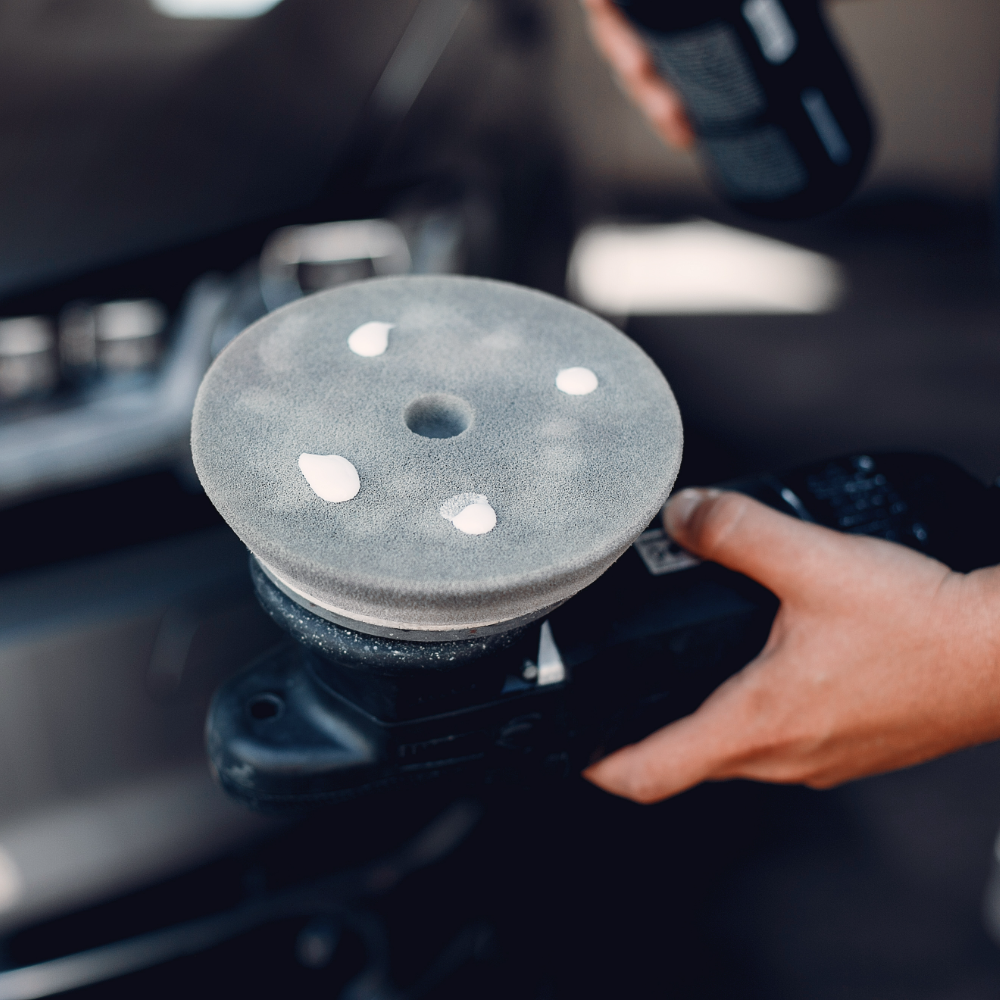
What are polishing compounds and why are they key to the final finish?
Technically, a polishing compound is a compound made up of abrasive microparticles suspended in a binder, which is generally a mixture of fats, waxes, or oils. Unlike a solid abrasive disc, where the grain is fixed to a rigid or flexible backing, the compound acts as a mobile agent.
Its function is not to remove material in large quantities, but to modify the surface topography at a microscopic level. The binder has a dual role: on the one hand, it fixes the abrasive to the support (cotton, felt, or sisal wheel), and on the other, it lubricates the working area to prevent overheating of the metal—something critical to avoid altering the temper or “burning” the shine.
From grinding to shine: the role of polishing compounds at each stage
- The finishing process is a progressive staircase. If grinding removes major imperfections and sanding evens out the surface, polishing compounds are responsible for closing the surface pores and generating light reflection.
- Refining: Scratches from the previous sanding stage (grit 320–600) are removed.
- Polishing (Cut): The compound acts on the surface by smoothing microscopic peaks.
- Buffing (Mirror finish): A very fine-grain compound is used to remove the “haze” from the previous step and achieve a sharp, clear reflection.

Skipping steps or using a finishing compound on a poorly prepared surface will not correct defects—it will only make them shine.
Common applications of polishing compounds in professional environments
The use of these compounds is widespread, but the level of requirement varies drastically depending on the sector. In a boilermaking or metal structures workshop, the goal is usually both functional and aesthetic: cleaning welds on stainless steel and unifying a satin or polished finish. Here, speed and cutting performance are key.
Industrial polishing, goldsmithing, and precision work
In sectors such as goldsmithing or the manufacturing of medical instruments, tolerances are minimal. A compound that is too aggressive could alter critical dimensions of the part or “eat away” engraved details. In the mold industry, for example, mirror polishing is functional—it allows the injected plastic part to release properly from the mold. Understanding these differences is vital: what works for a stainless steel railing can be disastrous for a precision brass watch component.

Types of polishing compounds according to the material being worked on
There is no “universal compound” that works 100% on all metals, as the hardness of the abrasive must be proportional to the hardness of the material being worked on.
Polishing compounds for steel and stainless steel
Stainless steel, due to its hardness and resistance, requires compounds formulated with tough abrasives (such as calcined aluminum oxides). The process generally begins with aggressive cutting compounds (pink or brown tones) for the initial grinding stage.
However, the real difference is made in the final stage: to achieve that characteristic mirror finish, it is essential to use very dry finishing compounds, such as our White Compound. This specific reference cleans the surface without leaving greasy residues, removing any trace of “haze” and ensuring a sharp, clean reflection on the part.


Polishing compounds for aluminum and soft metals
Aluminum, being a soft material with a low melting point, has a strong tendency to “load up” or clog polishing wheels if compounds that are too dry are used.
To work these metals (as well as zamak) safely, it is essential to use greasy formulations such as Cebo Compound. This product is specifically designed to dissipate heat during friction and prevent the material from adhering to the wheel, thus avoiding the appearance of deep scratches or deformations on the part.
Polishing compounds for non-ferrous metals and special applications
Metals such as copper, brass, or bronze (“red metals”) are prone to oxidation but greatly benefit from surface treatment. To work them, medium-shine compounds are used, allowing for a gentle cut while enhancing a deep, rich color on the piece.
For even more specific applications, such as working on technical plastics, lacquers, or metals that require delicate handling, Pumice Compound is the key reference. This compound is formulated to work at low temperature and perform a greasy polish, ensuring a uniform finish without the risk of burning or deforming heat-sensitive materials.

The importance of the finish: how polishing compounds influence the final result
The final result does not depend solely on the compound, but on the compound + tool combination. A cutting compound applied on a soft felt wheel will not cut; a finishing compound on a hard sisal wheel will leave marks.

Cutting, medium polishing, and finishing compounds
- Cutting Compounds (Grinding): They have a large, hard abrasive grain. Their purpose is to remove scratches from the previous sanding stage. They are usually dark or reddish in color.
- Medium Polishing Compounds: They balance cutting power and shine. They are the “all-rounders” for intermediate stages or for metals that do not require a perfect mirror finish.
- Finishing Compounds (Buffing): They contain very fine, friable abrasives. They barely cut; their function is to bring out color and depth. They are usually white, blue, or cream, and require loose cloth or flannel wheels.
How to choose the right polishing compound in a workshop or industrial process?
To make the right choice, ask yourself these three questions:
- 1. What material is it? (Determines the hardness of the compound).
2. What is the condition of the surface? (If it is heavily scratched, you need a preliminary cutting stage).
3. What finish does the client require? (Industrial satin vs. decorative mirror finish).

Best practices for the efficient use of polishing compounds
Cleaning between stages: Before switching from a coarse compound to a fine one, clean the part with a degreaser or talc to remove any previous abrasive residues.
Peripheral speed: Finishing compounds usually require higher speeds than cutting compounds to generate the friction needed to “melt” the shine, without burning the part.
Safety: Although they do not produce sparks, polishing generates fine particles. The use of a mask and safety glasses is non-negotiable.

Why choose Abrasteel’s polishing compounds?
At Abrasteel, we offer a complete range of polishing and buffing compounds for metals in both solid and liquid formats, designed to cover all stages of professional polishing. Their specialized formulations adapt to different finishing requirements and materials, from stainless steel to non-ferrous metals.
In addition, Abrasteel complements these compounds with a wide range of wheels, brushes, and accessories that allow each product to be integrated into a complete surface finishing process.

Polishing compounds are an essential tool for achieving professional, long-lasting finishes on metal parts. Whether in an industrial workshop, a restoration project, or more delicate precision work, knowing how to choose and apply the right compound makes the difference between a mediocre result and an impeccable one.
If you are looking to optimize your finishing processes and enhance the quality of your surfaces, consider Abrasteel’s solutions and the technical advice we can offer based on your material, tools, and final objective.
Contact us
Leave us your details and one of our sales representatives will contact you shortly.