
9 structural steel abrasives by operation in 2026
Structural steel
Technical selection of structural steel abrasives for cutting, grinding, weld preparation, cleaning, finishing and industrial maintenance.
These are the 9 structural steel abrasives Abrasteel recommends reviewing by operation:
- Cutting discs
- Grinding discs
- Flap discs
- Abrasive belts
- Shaft-mounted brushes
- Brushes for satin finishing machines
- Clean Strip discs
- Mounted points and compressed fibre
- Polishing compounds and felt tools
Structural steel is not worked with one single abrasive. A project may require cutting, burr removal, weld seam grinding, weld preparation, rust or paint cleaning, visible finishing and later maintenance. The correct choice depends on the stage, material, machine and required result.
At Abrasteel, we recommend selecting structural steel abrasives as a system. When each consumable is purchased separately, duplicated work appears quickly: a cut that leaves too much burr, grinding that is too aggressive, cleaning that marks the part or a finish that does not match the final use.
This guide separates the search intent from content focused only on cutting. Here the disc for cutting is one stage inside a wider industrial selection that also covers grinding, weld preparation, surface cleaning, finishing and maintenance.
The goal is to help purchasing, workshop and maintenance teams use the same map: what operation must be solved, what technical risk exists and which Abrasteel family should be reviewed before asking for advice.
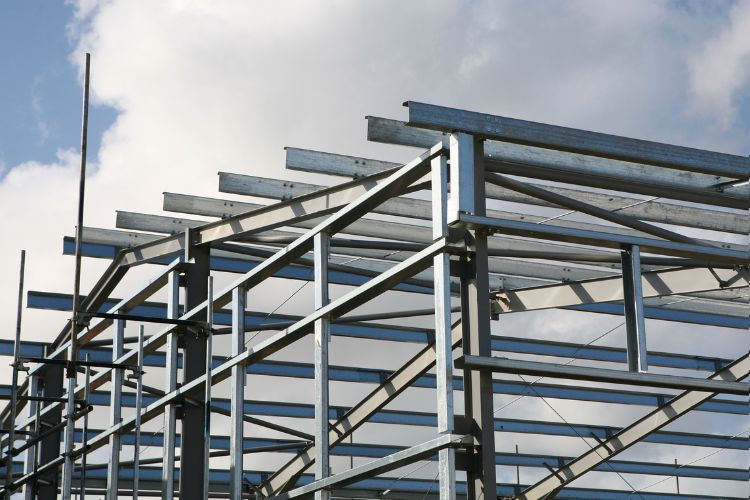
9 structural steel abrasives by operation
1. Cutting discs
Cutting discs are the first family when profiles, tubes, flats, plates or components must be separated during fabrication and maintenance. Their selection depends on material, thickness and machine. In structural steel, a good cut reduces burr, limits deviation and makes later work easier.
If the user’s only focus is cutting, it makes sense to review Abrasteel’s specific article on cutting metal structures. In this post, cutting is one stage in a broader abrasive sequence.
2. Grinding discs
Grinding discs enter the process when material must be removed quickly: burrs, weld seams, irregular edges or areas that need to be blended before welding, painting or assembly. They are more aggressive than flap discs and must be used with control to avoid weakening the part or generating excessive heat.
In structures, grinding often follows cutting or welding. Pressure, angle and contact time should be controlled so a local correction does not become unnecessary loss of material.
3. Flap discs
Flap discs are useful when the job combines removal and finishing. They can soften marks, blend transitions and leave a more controlled surface than a rigid grinding disc. In structural steel they are common for repairs, edge preparation and medium finishing.
Grit and product range change the result. A disc that is too aggressive can leave deep scratches; one that is too fine can take too long and consume more product than needed.
4. Abrasive belts
Abrasive belts fit continuous sanding, part preparation, edges, tubes or components that pass through a fixed machine or a dedicated tool. In structural steel they provide regularity when the work is done in batches or when a grit sequence is required.
Backing, mineral and joint affect service life. Zirconia or ceramic abrasives may be useful for demanding work; a correctly specified aluminium oxide belt can be enough for more general preparation.
5. Shaft-mounted brushes
Shaft-mounted brushes are practical for local cleaning, light burrs, internal areas, hard-to-access points and preparation before a later stage. They can be mounted on a drill or compatible tool depending on the format.
Do not choose them only by diameter. Review brush material, aggressiveness, access to the part and whether the goal is to clean without changing the geometry too much.
6. Brushes for satin finishing machines
Brushes for satin finishing machines help create linear, matte and uniform finishes on larger surfaces. They are useful when the structure or component has a visible area and the goal is consistency rather than pure removal.
On stainless steel or visible parts, testing the brush on a controlled area prevents texture changes that are difficult to correct. Pressure, speed and direction of work strongly affect the visual result.
7. Clean Strip discs
Clean Strip discs are useful for removing rust, paint, coatings or dirt without cutting into the material like an aggressive abrasive. In structural maintenance, they can save time when the need is cleaning and preparation, not heavy grinding.
Their advantage is controlled cleaning. If the part must keep its geometry or avoid deep scratches, Clean Strip can be more suitable than starting with a disc that is too aggressive.
8. Mounted points and compressed fibre
Mounted points and compressed fibre products are used for grinding, technical finishing, deburring or operations that need more control than rough removal. They can be relevant in auxiliary pieces, machined areas or precision work inside a structural assembly.
They are not the first option for cutting or removing large weld seams, but they can improve the result when the objective is regularity, soft transitions or finish before painting and final assembly.
9. Polishing compounds and felt tools
Many structures do not require fine polishing, but some visible stainless steel parts or finish components may need felt tools and polishing compounds. In those cases, polishing comes at the end of the sequence, after defects have been corrected with the right abrasives.
Using polishing compound to correct deep scratches is a mistake. First close the sanding or finishing sequence, then apply the polishing system that matches the material.
What buyers need from structural steel abrasives
A buyer searching for structural steel abrasives usually wants to solve an application-led purchase. They may be fabricating, repairing, cleaning, preparing for welding, dressing weld seams, removing paint or maintaining an installed structure. The question is not only which product exists, but which abrasive should be used at each stage.
This keyword has a broader intent than a query about one specific product. The reader may need discs, brushes, belts, mounted points or accessories in the same workflow. If the article spoke only about cutting, it would ignore grinding, cleaning, finishing and maintenance, which are real industrial needs.
Typical need
Build an abrasive selection by operation, material and expected finish, avoiding duplicated consumption and rework between stages.
How to organise the job by industrial stage
A practical way to choose abrasives is to separate the job into stages. First define whether the operation is cutting, grinding, preparation, cleaning, finishing or maintenance. Then review material, tool, access and finish level.
In fabrication, the sequence may be cutting, burr grinding, weld preparation and cleaning before painting. In repair, it may start with rust cleaning, removal of a damaged area, edge grinding and finishing. In maintenance, the priority may be removing coatings without weakening the structure.
- Cutting: cutting discs selected by material, thickness and machine.
- Grinding: rigid discs or flap discs depending on removal and control.
- Weld preparation: clean, accessible edges without contamination.
- Cleaning: brushes, Clean Strip or non-woven abrasives depending on contamination.
- Finishing: flap discs, belts, satin finishing brushes, mounted points or felt tools depending on texture.
- Maintenance: stable references that make the result repeatable.
This order prevents asking one abrasive to do everything. It also helps purchasing because every family has a defined role in the workshop.
Abrasive table by material, operation and finish
| Operation | Common material | Recommended abrasive | Risk if selected poorly |
|---|---|---|---|
| Cutting | Steel, stainless steel, aluminium | Cutting discs by material | Burr, heat, deviation or high consumption |
| Grinding | Structural steel and weld seams | Grinding discs or flap discs | Material loss or irregular finish |
| Weld preparation | Edges, bevels and adjacent areas | Controlled grinding, flap discs or brushes | Contamination, poor penetration or rework |
| Cleaning | Rust, paint, scale or dirt | Clean Strip, brushes or metal cleaning abrasives | Deep marks or poorly prepared surface |
| Finishing | Visible areas or stainless parts | Belts, satin brushes, mounted points, felt tools | Uneven texture or hard-to-correct marks |
| Maintenance | Installed structures | Selection by access, safety and repeatability | Stoppages, irregular consumption or incomplete repair |
When a portable grinder or abrasive wheel is involved, safety criteria must be part of the selection. Neutral references such as the OSHA standard on portable powered tools, the HSE guide on abrasive wheel safety and the FEPA bonded abrasives safety code help teams review guarding, mounting, inspection and operator precautions.
Related products for structural steel
These families cover the most common operations in structural steel. They do not replace application advice, but they help build a coherent technical basket.

Cutting and grinding discs
Core family for cutting, burr removal and material removal in steel and stainless steel.

Flap discs
For blending, medium finishing and preparation with more control than rigid grinding.

Abrasive belts
A solution for continuous sanding, edges, tubes and preparation on compatible machines.


Mounted points and felt tools
For controlled grinding, soft transitions and fine finishing when the component requires it.
Common mistakes when choosing abrasives for structures
Buying by family without defining the operation
Requesting discs, brushes or belts without explaining whether the goal is cutting, cleaning, grinding or finishing produces imprecise recommendations. The real operation must come before the product.
Using an aggressive abrasive for cleaning
When the need is to remove rust, paint or dirt, starting with grinding can mark the part or remove too much material. Brushes or Clean Strip may be more suitable when controlled cleaning is required.
Not separating steel and stainless steel
On stainless parts, avoid contamination and shared consumables with carbon steel. This separation affects discs, brushes, belts and finishing products.
Skipping grits or finishing stages
Trying to move from a deep mark to a fine finish without an intermediate sequence usually consumes more time. In belts, flap discs and polishing, grit progression is part of performance.
Ignoring access and safety
An installed structure is not worked like a bench part. Access, position, sparks, clamping and guards can change the abrasive and the tool completely.
Abrasteel as a structural steel abrasives supplier
Abrasteel can help you build a selection of structural steel abrasives by operation, material, machine and expected finish. We work with cutting discs, grinding discs, flap discs, belts, brushes, mounted points, felt tools, polishing compounds and metal cleaning solutions.
Our approach is technical and practical: first we understand the process, then we recommend families and references. This helps reduce duplicated consumption, improve finish, avoid rework and maintain supply continuity in fabrication or maintenance.
If you want to review a specific application, you can contact Abrasteel through contact or consult the abrasive family catalogue. For work where the only focus is cutting, also review the specific content on cutting metal structures.
Frequently Asked Questions (FAQs)
Which abrasives are used on structural steel?
It depends on the stage. Cutting discs are used for cutting; grinding or flap discs for burrs and weld seams; brushes or Clean Strip for cleaning; belts, satin finishing brushes, mounted points, felt tools or polishing compounds for finishing depending on material and texture.
How do I choose between a grinding disc and a flap disc?
The grinding disc removes material more aggressively. The flap disc offers more control and a better medium finish. If you need to remove a lot of material, start with grinding; if you need blending or preparation with less marking, review flap discs and the right grit.
Which abrasive is suitable for weld preparation?
Preparation may require clean cutting, controlled grinding, brushing or cleaning depending on the state of the part. The important point is to leave an accessible area with correct geometry, no contamination and no excessive marks that complicate the weld or later finish.
Can Clean Strip be used on structural steel?
Yes, especially for removing rust, paint, coatings or dirt when the goal is not to remove too much material. It is useful in maintenance and surface preparation, as long as the operation does not require heavy stock removal.
Are abrasive belts useful for structures?
Yes, when there is continuous sanding, edge preparation, tubes, profiles or parts that pass through a machine. They allow grit sequences and more repeatable results than an isolated manual operation, provided the machine is compatible.
What data should I send for technical advice?
Send material, operation, machine, workpiece dimensions, surface condition, expected finish, consumption volume and whether the part will be cut, welded, painted or maintained in place. That information makes it easier to recommend coherent abrasives for the full process.
Abrasteel advice
Which abrasives do you need by stage?
We review cutting, grinding, cleaning, finishing and maintenance.
Contact us
Leave us your details and one of our sales representatives will contact you shortly.