
5 criteria for choosing a mounted abrasive brush distributor in 2026
Abrasive brushes
5 criteria for choosing a mounted abrasive brush distributor in 2026
B2B guide for selecting a mounted abrasive brush distributor by material, machine, shank, grit, access, finish target and supply continuity.
These are the 5 criteria Abrasteel recommends checking before choosing a mounted abrasive brush distributor:
- A clear catalogue by mounted brush type
- Compatibility with tool, shank and speed
- Selection criteria by material, grit and finish
- Stable stock for recurring professional purchasing
- Technical advice when another abrasive family is better
A professional mounted abrasive brush distributor should help you choose the correct shank brush for the workpiece, not only provide a generic accessory. Mounted abrasive brushes are used with drills, die grinders and rotary tools when the operation needs access to small areas, holes, edges, radii, weld details or irregular surfaces.
At Abrasteel we treat them as technical consumables for cleaning, light deburring, surface preparation, satin finishing, blending and controlled polishing. The right choice depends on the material, machine and expected finish. A brush that works well on one part can mark another part too aggressively if the fibre, grit, diameter or pressure is wrong.
For distributors, maintenance teams, metal workshops, automotive suppliers and industrial buyers, the value is repeatability. A brush must solve the task, fit the tool and remain available for future orders. In repetitive purchasing, cost per operation matters more than unit price.
This guide explains how to assess a distributor, how to select mounted brushes by operation, which technical data to confirm and when to move from mounted brushes to core brushes, satin finishing brushes or another Abrasteel abrasive family.
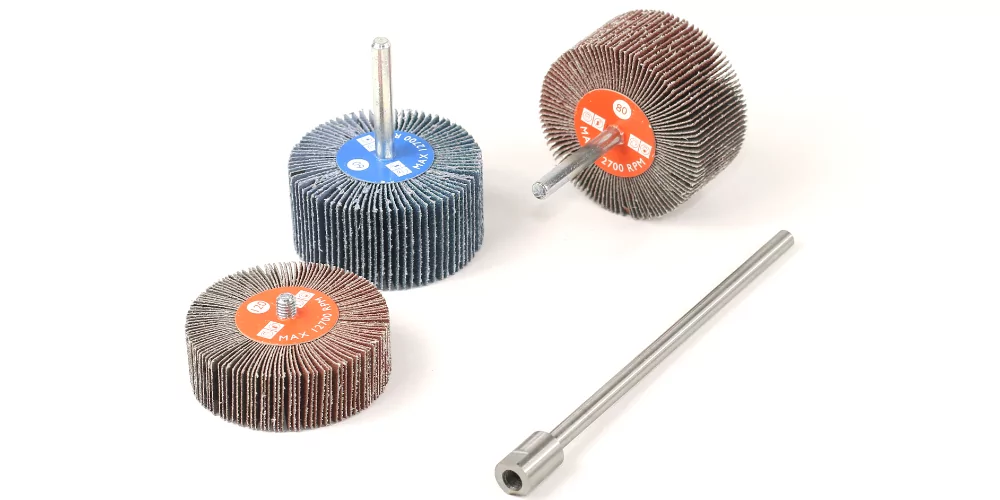
5 criteria for choosing a mounted abrasive brush distributor
1. A clear catalogue by mounted brush type
A technical distributor should separate the options clearly: general mounted brushes, zirconia cloth brushes, threaded-shank options, mixed-fabric brushes and non-woven mounted brushes. Each family changes the balance between cutting action, flexibility, surface conditioning and finish control.
Catalogue clarity reduces errors for workshops and resellers. It also helps the buyer understand when a small mounted brush is enough and when the process needs a wider contact area or a different machine.
2. Compatibility with tool, shank and speed
The shank is not a detail. A distributor should confirm shank diameter, useful length, clamping system, maximum speed, working direction and access to the area. If the mounted brush vibrates, the finish becomes irregular and the brush wears faster.
This is especially important with drills, pneumatic tools and die grinders. The brush must be compatible with the tool and with the operator’s working position. Safety and performance are linked: unstable mounting creates both poor finish and unnecessary risk.
3. Selection criteria by material, grit and finish
The same brush can clean one part correctly and leave excessive marks on another. The recommendation should consider carbon steel, stainless steel, aluminium, cast iron, rust, paint residue, weld marks, required texture and subsequent process.
A useful distributor does not ask only for diameter. It asks what result is expected after brushing. For stainless steel, avoid ferritic contamination and choose consumables suited to the material. For visible pieces, the final finish can matter more than fast removal.
4. Stable stock for recurring professional purchasing
Many mounted brush purchases begin as a maintenance or workshop need, but they become recurring orders when the reference works. A distributor must support stable references, predictable availability and technical alternatives when consumption changes.
For B2B buyers, this avoids process drift. The team can document the chosen reference, repeat the purchase and measure life, finish and cost per operation over time.
5. Technical advice when another abrasive family is better
A mounted brush is not always the final answer. If the surface area increases, if the finish must be more uniform or if production volume grows, it may be better to move to abrasive core brushes, brushes for satin finishing machines, felt tools or a different abrasive sequence.
That cross-family advice is a sign of a technical supplier. It means the recommendation is based on the real operation, not on forcing one product family into every application.
What professional buyers need from mounted brushes
A buyer looking for mounted abrasive brushes usually wants to solve a specific problem: access a recess, remove light rust, soften a burr, prepare a weld, blend a small area or create a more uniform surface before the next stage.
The intent is both commercial and technical. The buyer needs to know which brush type to order, whether the shank fits the tool, which grit is suitable, how to avoid marks and how to make the result repeatable across several jobs.
Professional need: a repeatable reference that is available, compatible with the machine and suitable for the material.
Technical need: control pressure, speed, grit, flexibility and finish so the brush cleans without damaging the part.
For distributors, Abrasteel’s role is to make those choices easier. The product family, the application and the expected finish should be discussed together, because the lowest-price accessory can become expensive if it creates rework.
How to choose mounted brushes by operation
Selection should begin with the operation, not with the product photo. The same part may need an aggressive brush in one stage and a non-woven brush in the next.
| Operation | Typical material | Recommended solution | What to check |
|---|---|---|---|
| Light rust cleaning | Steel, iron or maintenance parts | General mounted brush or mixed-fabric brush | Remove only what is needed and avoid deep marking. |
| Light deburring | Edges, radii and internal areas | Mounted brush or zirconia cloth mounted brush | Access, diameter, pressure and operator control. |
| Stainless steel blending | Visible stainless steel | Non-woven mounted brush | Avoid contamination and maintain a consistent pattern. |
| More aggressive action | Carbon steel or burrs | Zirconia cloth brush with shank | Grit, heat, following finish stage and service life. |
| Preparation before coating | Irregular metal geometry | Mixed-fabric or non-woven brush | Create surface conditioning without excessive scratches. |
Technical data to confirm before buying
Before requesting price or stock, define the tool and the mounting conditions. In mounted brushes, diameter, shank, useful length, grit, maximum speed and access to the work area can completely change the result.
Minimum information for a precise recommendation
- Tool: drill, die grinder, pneumatic tool or rotary tool.
- Fixing system: shank diameter, thread if applicable and useful clamping length.
- Material: steel, stainless steel, aluminium, iron, cast iron, paint, rust or mixed material.
- Operation: cleaning, deburring, satin finishing, blending, preparation or polishing.
- Geometry: internal area, edge, radius, hole, weld, tube or irregular surface.
- Finish target: fast action, fine mark, uniform texture or minimum material removal.
- Consumption: occasional maintenance, recurring workshop use or batch production.
Safety should be reviewed before the brush reaches the workpiece. Check shank condition, clamping, admissible speed, guards and personal protection. Neutral resources such as the OSHA portable powered tools standard, the HSE hand-arm vibration guidance and the FEPA safety publications can help reinforce internal procedures for portable abrasive tools.
If the job moves from occasional maintenance to repetitive work, record the selected reference, working time, finish obtained and reason for replacement. That information helps compare brushes by service life, stability and cost per operation.
Related Abrasteel mounted brush products
These Abrasteel product pages help narrow the selection. The exact reference should be confirmed by diameter, shank, tool, material and expected finish.


Mixed-fabric mounted brush
Balanced option for cleaning, blending and surface conditioning.

Non-woven mounted brush
For soft finishing, light satin work and controlled preparation.
Common mistakes when using mounted brushes
Applying too much pressure
The brush should work with its tips or fibres. If it is crushed against the part, it generates heat, deforms, wears faster and can leave deeper marks.
Ignoring shank compatibility
Poor clamping creates vibration, irregular finish and risk. Confirm diameter, thread if used and real tool grip before starting repetitive work.
Using the same brush on carbon steel and stainless steel
In stainless steel work, avoid ferritic contamination. A brush used on carbon steel can transfer particles to stainless steel and create later defects.
Choosing only by grit
Grit matters, but density, flexibility, diameter, length, speed and fabric type also change the real behaviour of the brush.
Skipping a representative test
Before standardising a reference, test it on a real part and check cleaning, mark, temperature, wear and repeatability. A good distributor should help structure that trial.
Abrasteel as a mounted abrasive brush supplier
Abrasteel supplies mounted abrasive brushes for professional cleaning, blending, light deburring, preparation and finishing. The family is designed for users who need selection criteria, not just a one-off accessory purchase.
Our recommendation process reviews tool, shank, material, geometry, operation, finish target and consumption. With that information, we can guide the buyer toward a general mounted brush, zirconia, mixed fabric, non-woven material or another Abrasteel solution if it fits better.
For distributors and professional buyers, Abrasteel provides technical catalogue options, industrial stock and practical advice to avoid common selection errors. If a mounted brush is not enough, we can also compare core brushes, satin finishing brushes, felt products or other abrasive sequences.
Do you have a specific application? Send the tool, material, access area and finish target. Abrasteel can help compare mounted brushes and other abrasive options for the process.
Frequently Asked Questions (FAQs)
What are mounted abrasive brushes used for?
They are used for cleaning, light deburring, blending, satin finishing, preparation and polishing in small or difficult-to-reach areas. They work with drills, die grinders and rotary tools when discs or belts cannot access the surface properly.
Which mounted brush should I choose for metal?
It depends on the operation. Non-woven and mixed-fabric brushes are useful for controlled cleaning and blending. Zirconia cloth can provide more aggressive action on steel. Diameter, shank, speed and finish target must be checked before choosing.
Can mounted abrasive brushes be used on stainless steel?
Yes, but avoid contamination from carbon steel and control temperature. For visible stainless steel, non-woven options are often more suitable than very aggressive brushes because they help maintain a more uniform finish.
What is the difference between mixed fabric and non-woven mounted brushes?
Mixed-fabric brushes combine more abrasive action with surface conditioning. Non-woven brushes prioritise control, flexibility and a softer, more uniform finish. The right choice depends on whether you need removal, cleaning or light finishing.
When should I move from a mounted brush to a core brush?
Move to a core brush when the surface is wider, the volume increases or the finish must be more repeatable. Mounted brushes are excellent for detail; core brushes provide a wider contact area and can be more stable in repetitive work.
What information does Abrasteel need to recommend a mounted brush?
Tool, shank diameter, material, operation, workpiece geometry, finish target, consumption and current problem. Photos of the work area or the previous reference can make the recommendation more precise.
Does Abrasteel supply mounted brushes for distributors?
Yes. Abrasteel works with an industrial B2B approach and can support distributors, workshops and professional buyers with mounted abrasive brushes, technical advice and stable product families for recurring applications.
Abrasteel advice
Which mounted brush fits?
Share tool, material and finish target so we can compare brush type and grit.
Stainless steel
Industrial stock
Contact us
Leave us your details and one of our sales representatives will contact you shortly.