
How to Remove Rust from Metal Without Damaging the Part in 2026
Guides & Tutorials
A comparative guide to choosing the right rust removal method based on the substrate, the degree of corrosion and what the part will be used for.
These are the 6 methods we recommend reviewing before choosing one:
- Cup brush
- Wheel (radial) brush
- Wire or cylindrical brush
- Grinding disc
- Cord (cable-twist) polishing wheel
- Non-woven pad or disc (Clean & Strip)
There is no single correct method for removing rust: the right answer changes depending on the substrate, the thickness of the corrosion layer and what will happen to the part afterward. Preparing a surface that is going to be painted is not the same as preparing one that is going to be welded, and working on carbon steel is not the same as working on stainless steel, where a tooling mistake can leave permanent contamination.
In the workshop we see the same mistake over and over: reaching for whatever abrasive tool is closest at hand, without stopping to ask whether the goal is to strip material fast or to clean the surface without attacking the base metal. That decision directly affects working time, consumable wear and the final result on the part.
In this guide we compare the six most common abrasive methods for removing rust: three types of brush, the grinding disc, the cord wheel and non-woven pads. We explain when each one makes sense based on the material, the degree of oxidation and whether the part will be painted, welded or left exposed.
If your case is a part with surface rust that only needs polishing and shine, we have a dedicated guide on the cord wheel for polishing that covers that method in more depth. Here we place it within the full picture, alongside the other options.

6 methods to remove rust from metal by substrate and finish
1. Cup brush
The cup brush mounts on a grinder and works well on flat or slightly curved surfaces with moderate rust. Its shape covers area quickly, which is useful on sheet metal or profiles with widespread but shallow corrosion. It is a common choice for preparing a surface before painting, when the goal is to clean without stripping too much base metal.
2. Wheel (radial) brush
The wheel brush mounts on a grinder or drill and concentrates the work on a narrower area than a cup brush. It is the standard choice for edges, welds, corners and hard-to-reach spots where a wider tool won’t fit. It performs well on localized rust and on weld-bead preparation before repainting or applying a surface treatment.
3. Wire or cylindrical brush
Wire or cylindrical brushes, mounted on a drill or shaft, give a gentler, more controlled result. They are the best option when the priority is cleaning without leaving heavy scratch marks, for example on parts with a visible finish or on areas that will later be welded, where it’s important not to alter the base metal surface too much. Our guide to types of abrasive brush covers the grit and mounting variants available for this job.
4. Grinding disc
When rust is deep, there is pitting or a thick crust, the grinding disc is the right tool: it strips material effectively and removes corrosion that a brush could not clear in a reasonable amount of time. It is the most aggressive method on this list, so pressure needs to be controlled to avoid removing sound metal unnecessarily.
5. Cord wheel for polishing
The cord wheel combines cleaning with a shinier finish than a conventional brush, without being as aggressive as a grinding disc. It fits well on surface rust for parts that will be left exposed or need a more refined finish. Because it’s a specific method with its own grit and mounting particulars, we cover it in detail in our dedicated guide to rust removal with a cord wheel.
6. Non-woven pad or disc (Clean & Strip)
Non-woven pads and discs, such as Clean & Strip, are the least aggressive option on this list. They barely remove any base metal and don’t generate the overheating typical of a grinding disc, which makes them ideal for stainless steel and delicate parts where the goal is to clean surface rust or patina without damaging the finish. We cover this family in more detail in our guide to non-woven abrasives.
How to choose a method based on carbon steel, stainless steel and part use
The choice is easier to organize by crossing two variables: the substrate being worked on and what will happen to the part after the rust comes off. The same degree of corrosion calls for different tools depending on whether the part will be painted, welded or left exposed with no further treatment.
On carbon steel there is more room to work with: you can be more aggressive without compromising the material, as long as you control the thickness removed. On stainless steel the requirement is different, because any tool that has previously touched carbon steel can leave ferritic contamination and trigger corrosion later, even if the part looks clean at first glance.
| Scenario | Recommended method | Reason |
|---|---|---|
| Surface rust, part to be painted | Cup or wheel brush | Cleans without removing useful thickness. |
| Deep rust or pitting | Grinding disc | Strips corrosion effectively. |
| Exposed part with a shiny finish | Cord wheel | Cleans and adds finish without being aggressive. |
| Stainless steel or delicate part | Non-woven pad (Clean & Strip) | Doesn’t strip base metal or overheat. |
It’s also worth considering the machine available at the workstation. A drill handles wire and cylindrical brushes with ease, but not every grinding disc or cord wheel works well at a standard drill’s RPM. An angle grinder, by contrast, covers almost every method on this list except the most delicate brushes, which bind up and lose precision at a grinder’s typical speed.
When the part is going to be welded afterward
If the part is headed for welding, the rust must be completely removed from the joint area, because any residue compromises the quality of the weld bead. A wheel or wire brush is a good fit for the fine-preparation stage, after grinding first if the crust was thick. Our guide to abrasive brushes for weld cleaning covers that process step by step.
When the part will be left exposed
If the part won’t be painted or coated, finish matters just as much as rust removal. A cord wheel or a non-woven pad leaves a more even surface than an aggressive brush, which can leave visible, uneven scratching on stainless steel or decorative parts.
Common mistakes when removing rust from metal
The most common mistake in the workshop is using the same brush or disc for carbon steel and for stainless steel. Even if the tool looks clean, it carries ferritic particles that later trigger corrosion spots on the stainless steel — a problem that can take weeks to show up, by which point it’s too late to fix without redoing the work.
Another common failure is defaulting to the most aggressive tool out of habit. A grinding disc on surface rust on thin sheet metal can eat into useful thickness and leave the part weaker than necessary, when a brush or a non-woven pad would have done the job without that risk.
Not considering what the part will be used for
Choosing a method before knowing whether the part will be painted, welded or left exposed leads to the wrong decision. Preparation before paint tolerates more aggression than preparation of a weld joint, and both tolerate more aggression than a finish that will be left visible without any coating.
Pushing harder instead of switching tools
When a brush or disc isn’t making progress, the usual reaction is to press harder. That tends to cause overheating, uneven marking on the surface and premature consumable wear. If the tool isn’t performing, the problem is almost always the method chosen, not the pressure applied.
Calling a part clean without checking edges and corners
Residual rust in corners, drill holes or old welds often goes unnoticed at a glance. If the part gets painted over without removing it, the rust keeps advancing under the paint layer and the problem resurfaces months later, this time with the coating already lifting.
Not protecting the operator from particles and dust
Brushing or grinding rust throws off metal particles and fine dust. Working without safety glasses, proper gloves and, where needed, a mask is a risk that comes up more often than it should on tasks that seem minor next to a cut or a weld grinding job.
Abrasteel products for rust removal
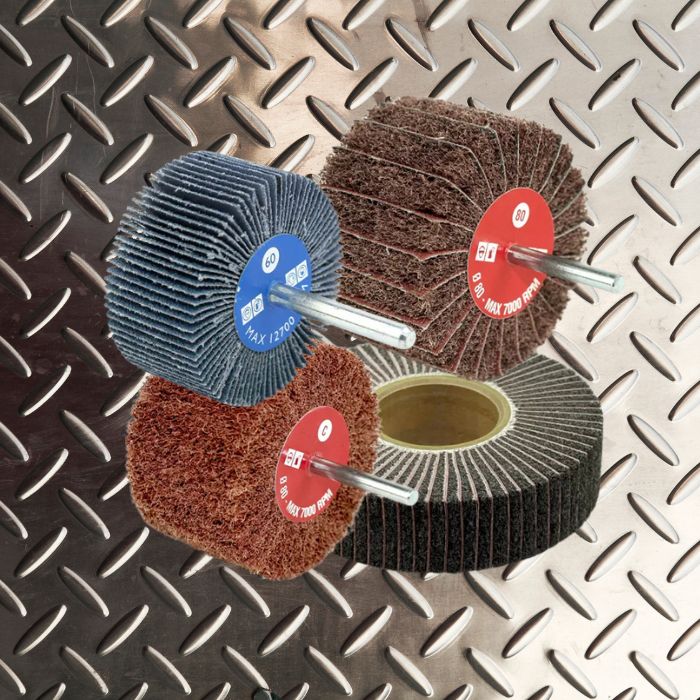
Abrasive brushes
Cup, wheel and wire brushes for surface and localized rust.
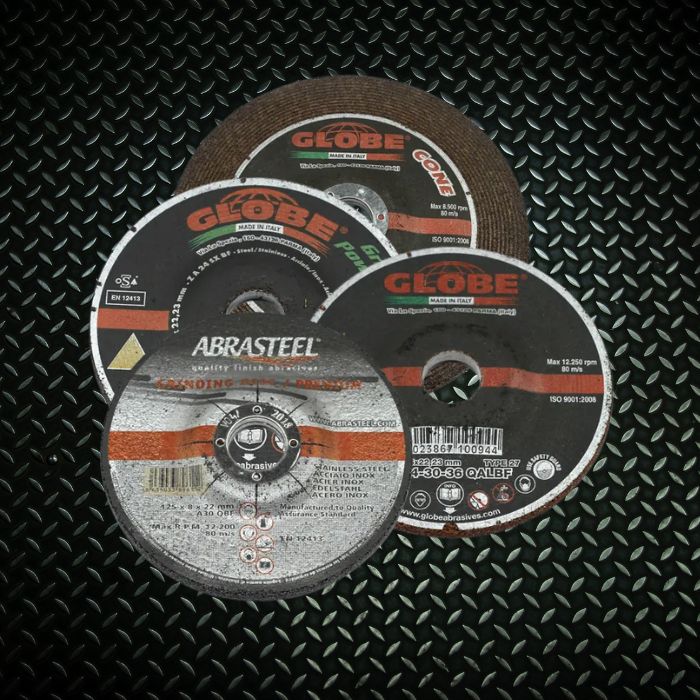

Clean Strip discs
Gentle cleaning without damaging the base surface, ideal for stainless steel.
If your workshop handles both carbon steel and stainless steel parts, it’s also worth checking our range of core-mounted brushes and the full technical catalog to compare formats, grit and machine compatibility.
Abrasteel as a technical supplier for industrial rust removal
At Abrasteel we work with workshops, industrial maintenance teams and metal fabricators who need to solve rust removal without compromising the part or the process time. The technical conversation always starts the same way: what substrate is it, how much rust is there, what operation comes next, and what finish is expected at the end.
With that information we help define the right combination of brushes, grinding discs, cord wheel or non-woven pads, and set up separate consumables when carbon steel and stainless steel coexist in the same workshop, to avoid cross-contamination. We work with these advantages:
- Stock available across all six product families covered in this guide.
- Technical advice based on material, machinery and expected finish.
- Separate references for carbon steel and stainless steel, to avoid cross-contamination.
- Continuity of supply for recurring maintenance and workshop jobs.
You can reach us through our contact page to review your case and choose the method that best fits your part.
Frequently Asked Questions (FAQs)
Which method removes rust without damaging the metal surface?
It depends on the degree of oxidation. For surface rust, a wire brush or a non-woven pad cleans with barely any base metal removed. For deep rust or pitting you need a grinding disc — more aggressive, but necessary when a brush can’t clear all the corrosion.
Can I use the same brush for carbon steel and stainless steel?
No. The tool carries ferritic particles that trigger corrosion on stainless steel even when it looks clean. Keep brushes and discs dedicated by material, and if the workshop handles both, separate the work tables and areas too.
When should I use a grinding disc instead of a brush?
When rust is deep, or there’s pitting or a thick crust a brush can’t clear in a reasonable time. On surface rust, a grinding disc is overkill and can eat into useful part thickness for no reason.
Does a cord wheel work for the whole rusted part?
It works best on surface rust for parts that will be left exposed, since it combines cleaning with a shinier finish. If the crust is thick, grind it down first and use the cord wheel as the final finishing step.
What’s the difference between a grinding disc and a Clean & Strip pad?
A grinding disc strips material effectively and is aggressive. A non-woven pad cleans with barely any base metal removed and no overheating, making it the preferred option on stainless steel and delicate parts where a grinding disc would be too much.
How do I know a part is ready for paint after removing rust?
The surface should be free of rust in edges, drill holes and corners, since anything left hidden keeps advancing under the paint. Check it under good light before applying the coating, not just the overall look of the part.
Abrasteel advice
Need to remove rust in your workshop?
We help you choose the right method by material.
Contact us
Leave us your details and one of our sales representatives will contact you shortly.