
7 criteria for custom abrasive wheels in 2026
Brushes and wheels
7 criteria for custom abrasive wheels in 2026
Technical guide to defining custom abrasive wheels by material, shape, grain, hardness, machine, safety and repeatability in grinding, deburring and finishing processes.
These are the 7 criteria we recommend checking before requesting custom abrasive wheels:
- Material and hardness of the workpiece
- Operation the wheel must solve
- Shape, dimensions and access area
- Abrasive grain type
- Hardness, bond and heat behaviour
- Machine, speed and mounting
- Repeatability, supply and cost per part
A custom abrasive wheel is defined when a standard reference does not fit the workpiece, machine or finish requirement well enough. It may be a mounted wheel, a made-to-measure wheel, a special shape for internal access or a specific combination of grain, hardness and bond for a repeated process.
In a workshop, the problem is rarely solved only by changing the diameter. If the wheel vibrates, glazes, burns the part, loses shape or fails to leave the expected finish, the specification must be reviewed through material, pressure, speed, geometry, hardness and abrasive type.
The purpose of this guide is to help the reader move from a general need to a useful technical request. If the application involves internal grinding, burr removal, edge adjustment, radius work, mould preparation or a repetitive industrial process, the supplier needs clear data before recommending or manufacturing a wheel.
At Abrasteel, we use these criteria to guide the choice of custom abrasive wheels, compare standard alternatives and reduce trial-and-error purchasing.
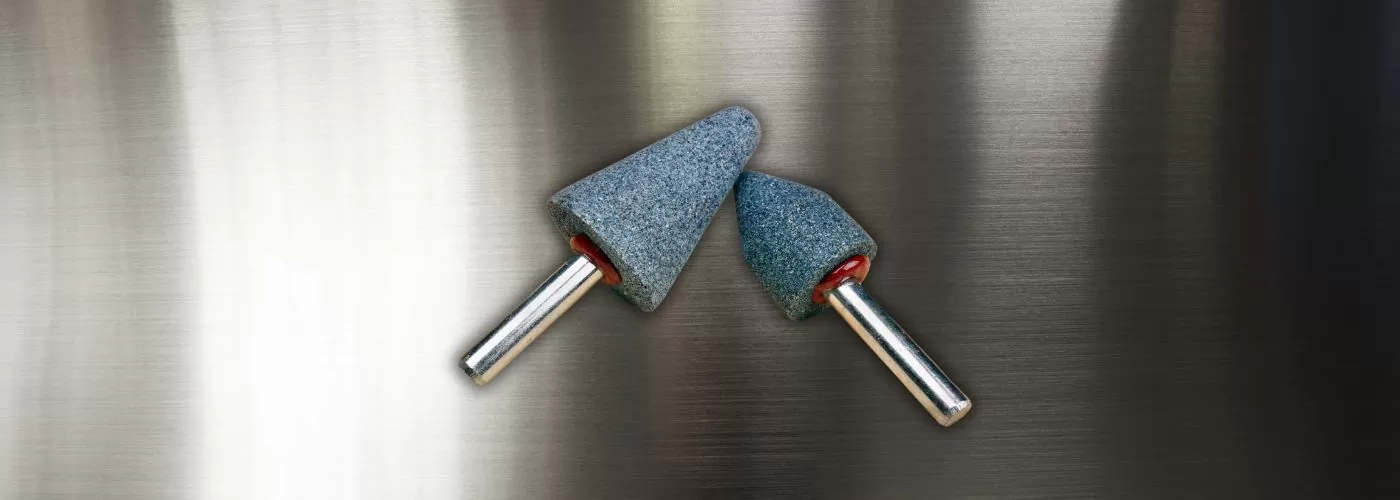
7 criteria for defining custom abrasive wheels
1. Material and hardness of the workpiece
Material conditions the entire specification. Carbon steel, stainless steel, cast iron, aluminium, bronze, titanium, hardened steel and non-ferrous alloys all behave differently. Each one changes heat generation, loading, cutting action and shape stability.
For repetitive processes, indicate approximate hardness, heat treatment, coating, welded areas, rust or previous machining. These data help define grain, hardness and structure without overspecifying the wheel.
2. Operation the wheel must solve
A wheel for fast deburring is not the same as a wheel for internal grinding, weld correction, pre-finish work, radius adjustment, mould finishing or preparation before polishing. The operation defines whether the priority is removal, shape control, lower temperature or finer finish.
An aggressive wheel may be profitable for removal, but excessive if tolerance must be preserved. A wheel that is too fine may give a good finish, but take too long to correct heavy burrs. The expected result must be described before the product is defined.
3. Shape, dimensions and access area
Wheel geometry must fit the workpiece. Cylindrical, conical, spherical, ogival, flat, pointed or profiled shapes change contact, pressure and access. In internal areas, grooves, edges, radii or cavities, the wrong shape forces a poor tool angle and increases vibration.
For made-to-measure requests, send a drawing, sketch, photograph or sample when possible. Useful dimensions include working diameter, length, radius, thickness, shank, free length, contact area and tolerance if relevant.
4. Abrasive grain type
Grain defines cutting ability and behaviour on the material. Custom abrasive wheels may use options such as aluminium oxide, pink aluminium oxide, ruby aluminium oxide, silicon carbide, ceramic grain or specific mixtures depending on the application.
Aluminium oxide is common for general steels. Silicon carbide may suit non-ferrous, hard or brittle materials. More technical grains can improve performance, but only if the machine, pressure and process allow them to work correctly.
5. Hardness, bond and heat behaviour
Wheel hardness does not mean grain hardness. It describes how the bond holds the grain. A wheel that is too hard can glaze, lose cutting action and heat the workpiece. A wheel that is too soft can wear quickly, lose profile and increase cost per operation.
Bond and structure affect chip evacuation, heat generation and service life. On stainless steel and thin parts, temperature control may be the priority. In heavy deburring, removal ability may matter more.
6. Machine, speed and mounting
The wheel must be compatible with the machine. Confirm tool type, shank diameter, collet, free length, power, maximum speed, guard and mounting stability. A good abrasive specification can fail if the collet is worn or if the wheel runs with excessive overhang.
Speed affects cutting, temperature and safety. Do not exceed permitted RPM and do not mount damaged, wet, impacted or incompatible wheels. In industrial processes, document conditions of use so the result can be repeated.
7. Repeatability, supply and cost per part
For industrial purchasing, the correct metric is not only unit price. Measure cost per accepted part: tool life, operation time, wheel changes, rework, rejected parts and finish stability.
If a custom wheel works, document code, shape, dimensions, grain, hardness, bond, machine and conditions of use. That record allows repeated supply without restarting the technical process every time.
What buyers need when they request custom wheels
Someone searching for custom abrasive wheels usually has a specific part or production issue. They may need a wheel that enters a cavity, holds a profile, reduces vibration, improves finish or lasts longer than a standard reference.
The intent is both technical and commercial. The buyer must understand the variables that affect manufacturing, but they also need a supplier that can interpret the application and turn it into a repeatable reference.
Technical need: adapt shape, grain, hardness, bond and mounting to a real grinding, deburring or finishing operation.
Purchasing need: obtain a manufacturable and repeatable reference with stable supply for workshop, maintenance or production.
The key is to know when a standard solution is enough and when a custom specification is justified. Customising too early can increase complexity. Waiting too long can increase rework, tool changes and process variation.
Wheel shape, grain and specification options
Customisation can affect shape, dimensions, shank, grain, hardness, structure or combination with other consumables. The following table helps organise the decision before asking for a made-to-measure solution.
| Variable | Typical options | When to review it |
|---|---|---|
| Shape | Cylindrical, conical, spherical, ogival, flat, pointed or special profile. | When there are radii, interiors, grooves, edges, deep burrs or limited access. |
| Grain | Aluminium oxide, pink oxide, silicon carbide, ceramic or technical mixture. | When material, cutting action, heat, service life or finish quality changes. |
| Hardness | Soft, medium or hard according to grain retention and shape stability. | When the wheel glazes, burns, wears too fast or loses profile. |
| Mounting | Mounted wheel, made-to-measure wheel, machine wheel or special accessory. | Whenever the tool, collet, speed or access conditions safety. |
| Dimensions | Diameter, working length, radius, thickness, shank and free length. | When tolerances, repetitive production or interference with the part matter. |
How to prepare a technical request
A request for a custom wheel does not need to be a long report, but it should include enough data to avoid manufacturing the wrong geometry or specifying the wrong abrasive behaviour. A clear request also helps identify when a standard Abrasteel reference may be enough.
Recommended data to send
- Material: steel, stainless steel, cast iron, aluminium, titanium, bronze, technical plastic or treated material.
- Operation: internal grinding, deburring, edge adjustment, weld correction, finishing or preparation.
- Machine: die grinder, drill, micromotor, grinding machine, CNC or automated system.
- Dimensions: diameter, length, shape, radius, shank, free length and tolerance if any.
- Current problem: vibration, heat, wear, breakage, poor cutting action, loss of shape or insufficient finish.
- Consumption: units per week, parts per batch, repeat frequency and supply priority.
If an existing wheel works partially, send it as a reference or describe it. If the problem appears only after several parts, indicate how many parts are produced before the failure becomes visible.
For complex geometry, a photograph helps. For critical dimensions, a drawing is better. If the goal is to improve performance, data on time, wear and finish is more valuable than a general description.
Common mistakes when ordering custom wheels
Ordering only by shape and diameter
Shape is important, but it does not define the full wheel. Without material, operation, grain, hardness, machine and speed, a reference can fit physically and still fail in performance or safety.
Choosing excessive hardness to gain service life
A harder wheel does not always last better. If it does not release worn grain, it glazes and heats. Service life comes from balancing hardness, grain, pressure, speed and material.
Ignoring the collet or shank
A worn collet, incompatible shank or excessive overhang can create vibration. Before changing the wheel specification, check the mounting system and machine condition.
Using the wheel for another operation
A wheel designed for localised grinding or deburring should not be forced as a general stock-removal tool. Changing the operation changes pressure, temperature, breakage risk and finish.
Not recording the final specification
If a custom wheel works, record it. Without an internal technical sheet, the next order depends on memory, loose photographs or approximations.
Related Abrasteel products to compare
Before manufacturing a special wheel, compare nearby families. Sometimes a standard reference is enough. In other cases, the right solution is a custom wheel defined by application.

Custom wheels
For special shapes, dimensions or specifications when a standard reference does not solve the part.

Mounted wheels
Standard option for grinding, deburring and internal access with common shank formats.

Technical grain options
Alternative when the process needs cutting action, stability or lower heat by material type.
Safety and validation before using a custom wheel
Customisation does not remove the need for standard safety checks. The wheel must be compatible with the machine, speed, guard and mounting system. Inspect the wheel before use and reject damaged, cracked, impacted or deformed consumables.
For internal safety procedures, consult neutral references such as the FEPA safety publications for abrasive products, the UK HSE guidance on safety in the use of abrasive wheels and OSHA's abrasive wheel machinery requirements.
When the first custom batch is tested, record speed, pressure, tool, operator feedback, finish and service life. The technical validation should prove that the wheel is not only physically correct, but also safe and repeatable.
Abrasteel as a supplier of custom abrasive wheels
At Abrasteel, we work with abrasive wheels, mounted wheels and made-to-measure wheel solutions for metal, stainless steel, maintenance, tooling, fabrication, repair and industrial processes where geometry or performance cannot be solved with a generic product.
Our role is not to sell an isolated shape. We help define a specification that makes sense for material, operation, machine, speed, finish and consumption. In repetitive work, a small improvement in shape or hardness can reduce tool changes, rework and time per part.
If you have a special need, prepare material, operation, dimensions, photograph or drawing, machine and current problem. With that base, we can assess whether the right path is a standard reference, an adaptation or a custom wheel.
Need to define a custom abrasive wheel? Send us data about the part, the machine and the current failure. We help you prepare a useful technical request before manufacturing or repeating an order.
Frequently Asked Questions (FAQs)
What is a custom abrasive wheel?
It is a wheel defined for a specific application, whether by shape, dimensions, grain, hardness, bond, shank or a combination of variables. It is used when a standard reference does not fit, does not finish correctly, wears too quickly or is not repeatable.
When is a custom abrasive wheel worth requesting?
It is worth considering when the operation is repetitive, the part has difficult access, the standard wheel vibrates or loses shape, the finish is unstable or the cost per part improves with a more precise geometry and specification.
What data should I send to define a custom wheel?
Material, operation, work area shape, dimensions, machine, approximate speed, shank or mounting system, expected finish, consumption and current problem. A drawing, photograph, sample or previous wheel also helps.
Does a harder custom wheel always last longer?
No. A wheel that is too hard can glaze and heat the workpiece. A wheel that is too soft can wear too quickly. Service life depends on the balance between grain, hardness, bond, pressure, speed and material.
What causes vibration in a custom mounted wheel?
Possible causes include a worn collet, incompatible shank, excessive overhang, wrong speed, imbalance, unsuitable shape or irregular pressure. Check the machine and mounting before changing the abrasive specification.
Can I use the same custom wheel for steel and stainless steel?
For non-critical work it may be possible, but stainless steel needs control of contamination, heat and finish. If the process requires quality or repeatability, define the wheel for the material and separate consumables when needed.
Abrasteel advice
Need a custom wheel?
Send us material, shape, machine and current problem.
Contact us
Leave us your details and one of our sales representatives will contact you shortly.