
Welding grinding disc
Welding grinding: an essential technique in metal finishing
Welding grinding is a fundamental operation in many industrial sectors where it is necessary to remove weld beads or surface imperfections after joining metal parts. This technique not only improves the aesthetic appearance but also ensures better mechanical fit and prevents stress points or premature corrosion.
In sectors such as boiler making, metal construction, machinery manufacturing, and the shipbuilding industry, grinding is part of the finishing process prior to additional treatments such as painting, polishing, or passivation. For this reason, having suitable abrasive tools and effective techniques is key to achieving uniform, safe, and durable finishes.
The grinding disc is the most common and efficient tool for these tasks, especially when dealing with wide weld beads or high-hardness materials. Throughout this article, we will explain how to choose the right grinding disc, how to apply it precisely, and which Abrasteel products are specifically designed for each need.
Table of Contents
What is a grinding disc and how does it work?
A grinding disc is a high-hardness abrasive tool designed to remove material in operations such as grinding, leveling, or preparing metal surfaces. Unlike cutting discs, which make clean cuts, grinding discs work on the volume of the material, progressively wearing down specific areas such as weld beads, burrs, or surface imperfections.
Its composition usually includes a mixture of abrasives (such as aluminum oxide, zirconia, or ceramic) bonded with phenolic resins reinforced with fiberglass. This ensures mechanical strength, durability, and safety during use at high speeds.
Grinding discs are commonly used with angle grinders and require a controlled technique: applying consistent pressure, maintaining an attack angle between 20º and 30º, and avoiding overheating that could alter the structure of the base metal.
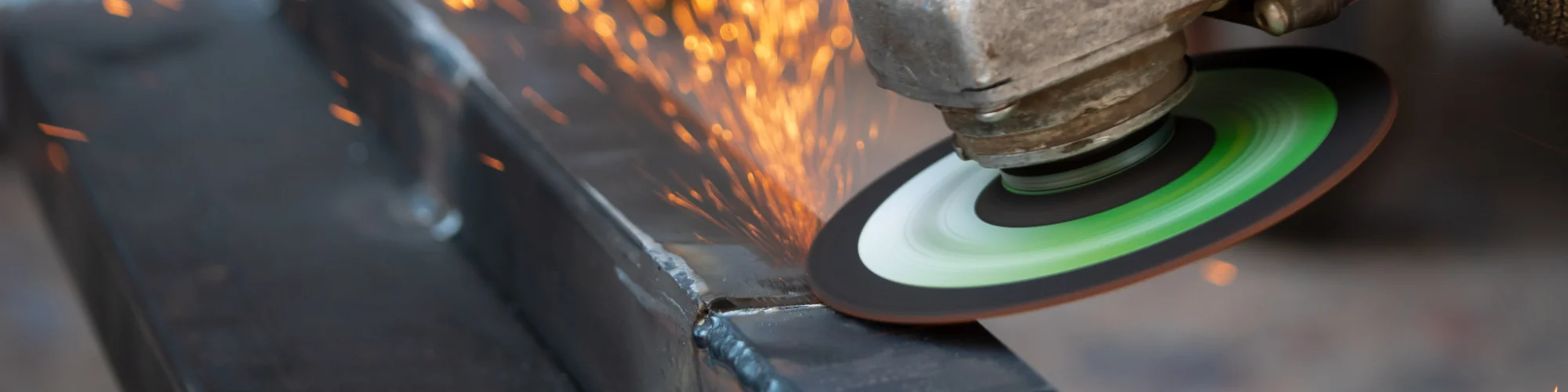
This tool is essential when speed, aggressive material removal, and uniformity in preparing parts are required before subsequent processes such as fine grinding or polishing.
How to choose the right grinding disc according to the type of weld and material
Selecting the correct grinding disc is key to achieving a professional finish, optimizing work performance, and avoiding damage to the workpiece or the tool. The choice should be based on three main factors: the type of base material, the type of weld performed, and the desired finish.
Type of material
Carbon steel
It requires durable and economical discs, such as aluminum oxide ones, suitable for general grinding tasks.
Stainless steel
It requires discs that prevent contamination and secondary oxidation. Iron-, sulfur-, and chlorine-free discs, such as Abrasteel’s zirconia or ceramic discs, are the most suitable.
Non-ferrous alloys (aluminum, copper, bronze...)
It is recommended to use specific discs to prevent clogging, with cooling additives or special formulations such as those from Abrasteel’s ALU line.
Type of weld
Flat or angled weld beads
They require discs with good stability and initial aggressiveness. Ceramic discs are ideal due to their self-sharpening capability.
Welds in delicate or structural areas
Fine-grit or controlled grinding discs are chosen to avoid weakening the workpiece.
Visual or aesthetic finish
It is advisable to grind with softer discs or combine them with flap discs for a uniform final finish.
Tool compatibility
Make sure the disc’s diameter and thickness are compatible with the grinder.
Always use discs certified according to safety standards, such as EN12413, which are present in all Abrasteel grinding discs.
Proper technique for grinding weld beads
Grinding a weld not only removes excess material but also defines the quality of the finish, structural strength, and aesthetics of the piece. Applying the correct technique improves productivity and extends the lifespan of grinding discs.
Preparation beforehand
Before starting, inspect the weld. Make sure there are no loose metal projections or contaminants. Secure the workpiece in a stable position, using a workbench or clamps if necessary.
Working angle
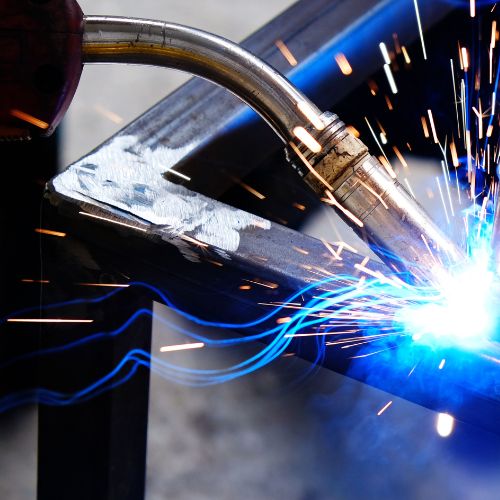
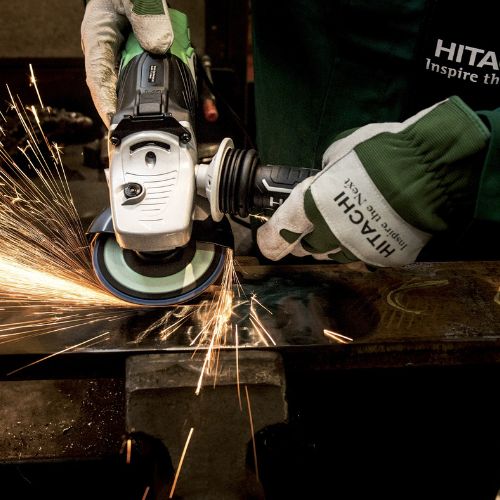
The optimal angle for working with grinding discs is 30° to 35° relative to the surface. This allows for aggressive cutting without uneven disc wear. An angle that is too flat generates excessive heat, while one that is too vertical can damage the weld or the disc.
Contact pressure
The pressure should be firm but not excessive. Let the abrasive do the work. Forcing the tool can overheat the disc, cause premature wear, and compromise operator safety.
Constant movement
Maintain a smooth, steady, and longitudinal movement over the weld bead. Avoid stopping in one spot, as this can cause deep marks or overheated areas.
Progress check
Regularly inspect the progress of the grinding and the condition of the disc. If you are aiming for a visual finish, you can alternate with flap or fiber discs to even out the texture.
Recommended Abrasteel products for welding grinding
Abrasteel offers a specialized range of abrasive discs designed to work on welds in metal structures efficiently, safely, and with professional finishes. Below, we highlight the most suitable solutions according to the official catalog:
BASIC Grinding Discs
Ideal for general work on steel and cast iron. Their A24RBF composition offers good material removal and durability in applications such as grinding weld beads, beveling, or grinding rusty areas.


ZAFIR and TURBO INOX Flap Discs
Recommended for a second step after grinding, where a finer finish is desired. Made with zirconia and fiberglass backing, they offer good aggressiveness and adaptability for work on stainless steel and curved surfaces.
Zirconia and Ceramic Fiber Discs
Mounted on vulcanized fiber backing, they are ideal for demanding applications on stainless steel, special alloys, or heat-treated materials. They reduce heat buildup and improve grinding control.

All these products are manufactured according to the EN12413 standard, and many have OSA certification, which guarantees not only high performance but also safety during professional use in workshops, boiler making, metal structures, or maintenance work.
The right grinding disc makes all the difference
Welding grinding is a fundamental operation in multiple industrial sectors, from boiler making to machinery manufacturing, including metal structures, piping, and maintenance work. Choosing the right grinding disc not only improves the final finish but also reduces working time, minimizes tool wear, and ensures greater operator safety.
At Abrasteel, we not only offer a specialized catalog of abrasive solutions but also have a technical team ready to help you select the most suitable product based on your application, material, and type of machine.
If you need personalized advice or want to try our grinding discs, contact our sales department or access our web form directly. We will be happy to help you improve your work processes with reliable and certified products.
FAQs
What is a grinding disc?
A grinding disc is a type of abrasive tool designed to quickly remove material from metal surfaces. It is mainly used with angle grinders and is made up of abrasive grains bonded with resins and reinforced with fibers. These discs are thicker than cutting discs and are built to withstand lateral pressure, making them ideal for grinding weld beads, removing burrs, cleaning rusty surfaces, or leveling metal parts. In industrial and maintenance applications, the grinding disc is essential for preparing metal structures before painting or final finishing.
What is a grinding disc used for in welding?
The grinding disc in welding work is used to remove the excess material generated during the joining process. After welding two pieces, it is common to have a weld bead with irregularities, protrusions, or excess metal that must be removed to ensure a smooth, safe, and functional finish. Additionally, grinding prepares the surface for subsequent operations such as polishing, fine sanding, or the application of paints and protective coatings. It is a key phase in preparing metal parts in sectors such as boiler making, machinery construction, shipyards, or metal structure manufacturing.
Why is it necessary to grind a weld?
Grinding a weld not only improves the aesthetics of the piece but is also a functional and safety necessity. An unground weld can have areas where dirt, moisture, or paint accumulate, which over time can lead to corrosion or structural failures. Additionally, in sectors such as automotive, aerospace, or the food industry, where precision and hygiene are critical, grinding ensures uniform and safe surfaces for final use. It also allows detection of possible defects in the joint (such as pores or cracks) before the work is considered complete.
What type of disc is recommended for grinding welds?
The choice of disc depends on the material to be worked on and the type of weld. For general applications on carbon steel, standard grinding discs like Abrasteel BASIC (ref. DDA0001 to DDA0006) offer good performance and durability. When working on stainless steel or alloyed materials, it is advisable to use discs with zirconia or ceramic abrasives, such as TURBO INOX flap discs or Abrasteel’s ceramic fiber discs, which better withstand temperature and provide a cleaner cut. For an intermediate finish after aggressive grinding, flap discs help smooth the surface and prepare it for polishing or painting.
Can a cutting disc be used for grinding?
No, and doing so poses a significant risk to the operator. Cutting discs are made with a thinner profile and designed to perform straight-line cuts. They cannot withstand lateral forces or pressure applied to the disc face. Using them as grinding discs can cause breakage, loss of tool control, and serious accidents. Each disc is designed for a specific function and must be used according to the manufacturer’s recommendations. To grind welds safely and efficiently, a grinding disc or, when appropriate, a flap disc should always be used depending on the stage of the work.
Contact us
Leave us your details and one of our sales representatives will contact you shortly.